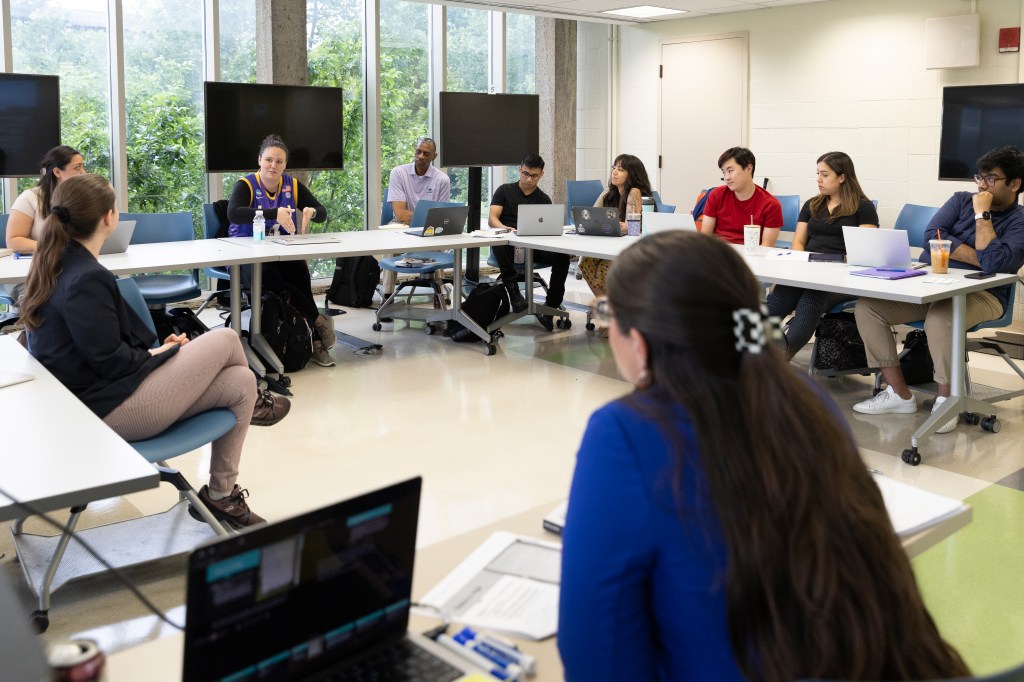
Co-Learning in a Formal Classroom
As a professor, I am constantly reflecting on the unique positioning I hold with students. Particularly since the beginning of Project STAR, power dynamics among students, staff, and faculty have been an organic focal point of this reflection. My scholarship has long been influenced by Paulo Freire (1968), who gave us the language to describe how inequity is maintained through contemporary educational models.
Knowing this and balancing my expectations as a professor, I strive to enact equitable learning practices within the courses I facilitate. In a co-learning environment, everyone bears responsibility for each other’s learning. At the start of each course, we go over communal learning expectations, which are open for adjustment throughout the course. I seek class participation that:
- builds upon the comments of your peers,
- provides meaningful connections between course materials,
- shares insights on a topic,
- and enhances the complexity and richness of our discussion.
- engages your classmates in discussion by posing questions to one another.
We unpack what co-learning is: no single person is in charge of disseminating information. We are all responsible for showing up to class with the readings completed and prepared to share our reflections in advance of small- and large-group conversations. As the research expert, I provide questions in each course syllabus to guide students’ reading, as the amount of information in a single article can be overwhelming. My goal for students is to increase their ability to recognize sound arguments and bias, and to effectively formulate a position backed by peer-reviewed sources. Here is a shortened list:
- What is the purpose of the reading?
- What are the main concepts? What does the author assume? What methods and data do the authors use to reach their findings?
- What is the relationship between the author’s ideas and findings and your own thoughts on the subject?
- How does the reading relate to other course materials and your future practice?
Learning happens in class when we are in conversation with each other, and classmates work together to connect a reading about a phenomenon or theory to a real-life situation at work. When we can use our newfound understanding of the different factors that mix together to create a situation, a system, a structure, etc., to expand our navigation skills and toolbelt. The assessment is in real time when no classmates or professors are around, and a similar event occurs. Can you approach the situation more slowly, from a slightly different, more informed angle? Is the outcome more aligned with our shared vision for an equitable future?
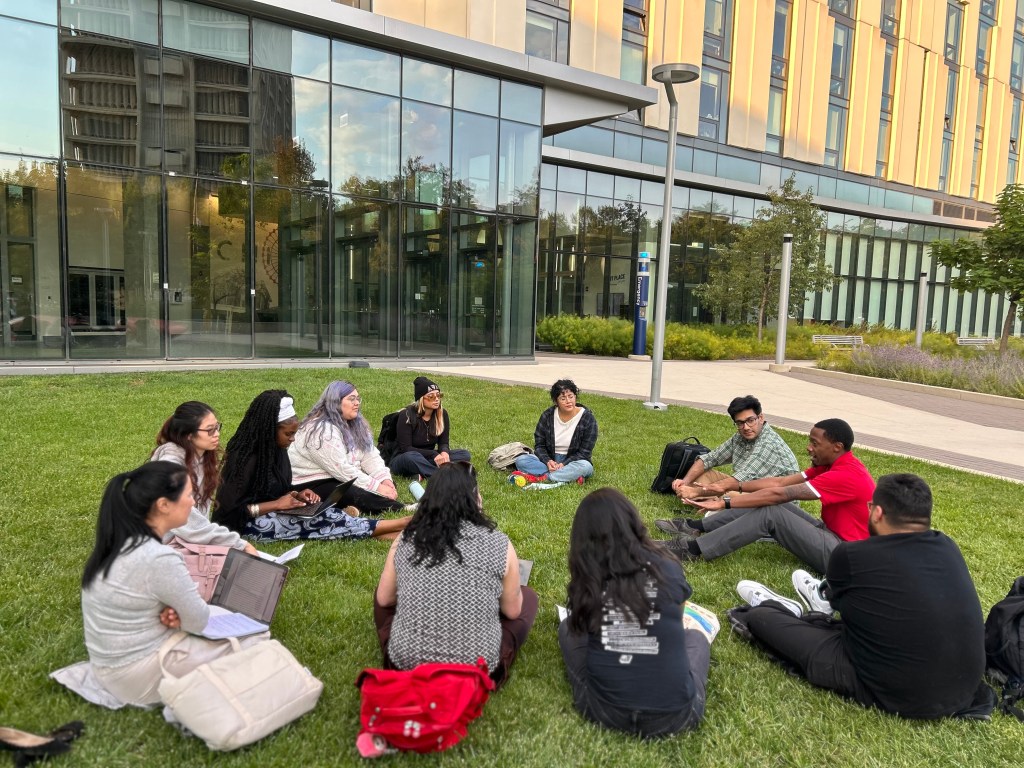
EDPS 515: Urban Higher Education Organization and Context enjoyed a late summer evening together in Fall 2025.


